Wash service
House Soft Washing
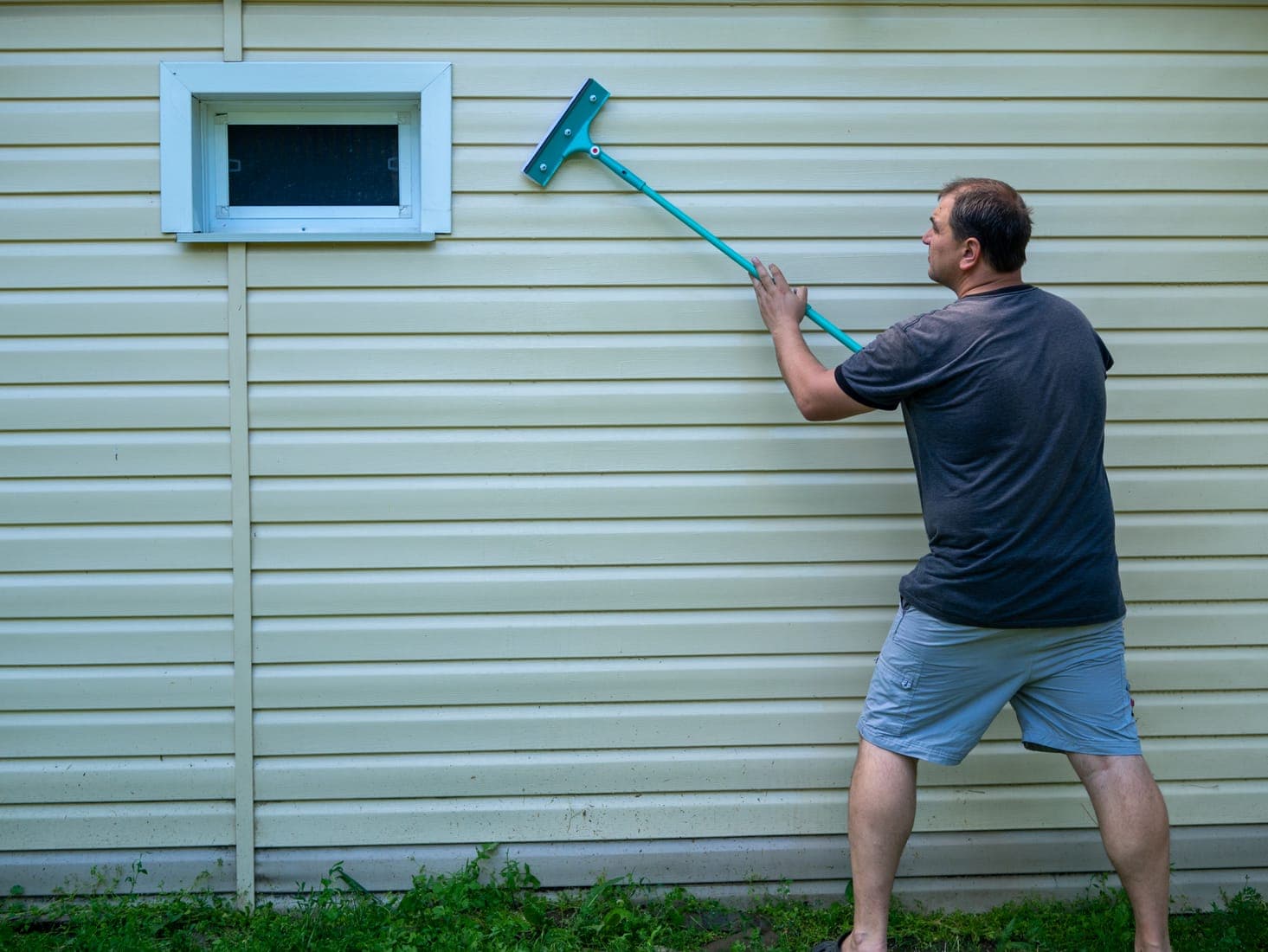
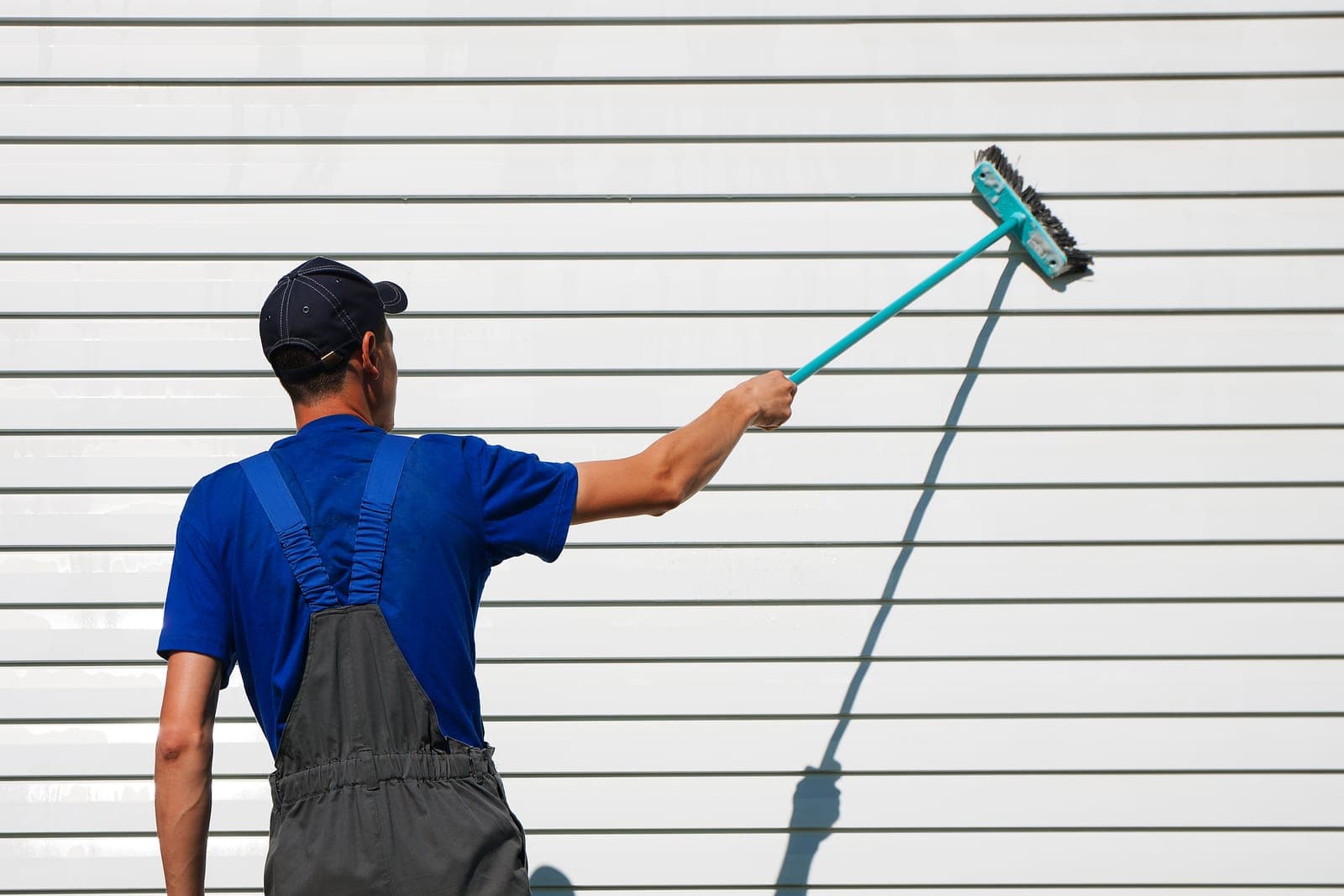
Low-pressure exterior house washing that kills the mildew and algae on your siding instead of blasting it off. Safe for vinyl, stucco, Hardie, brick, painted wood, and everything underneath them.
From $249 · Priced on wall square footage, not floor area. Single-story with simple elevations sits low. Two-story, heavy growth needing extended dwell, complex rooflines with lots of soffit, painted wood requiring extra care, and difficult access all move it up. A typical single-story home lands in the $280–$450 window.
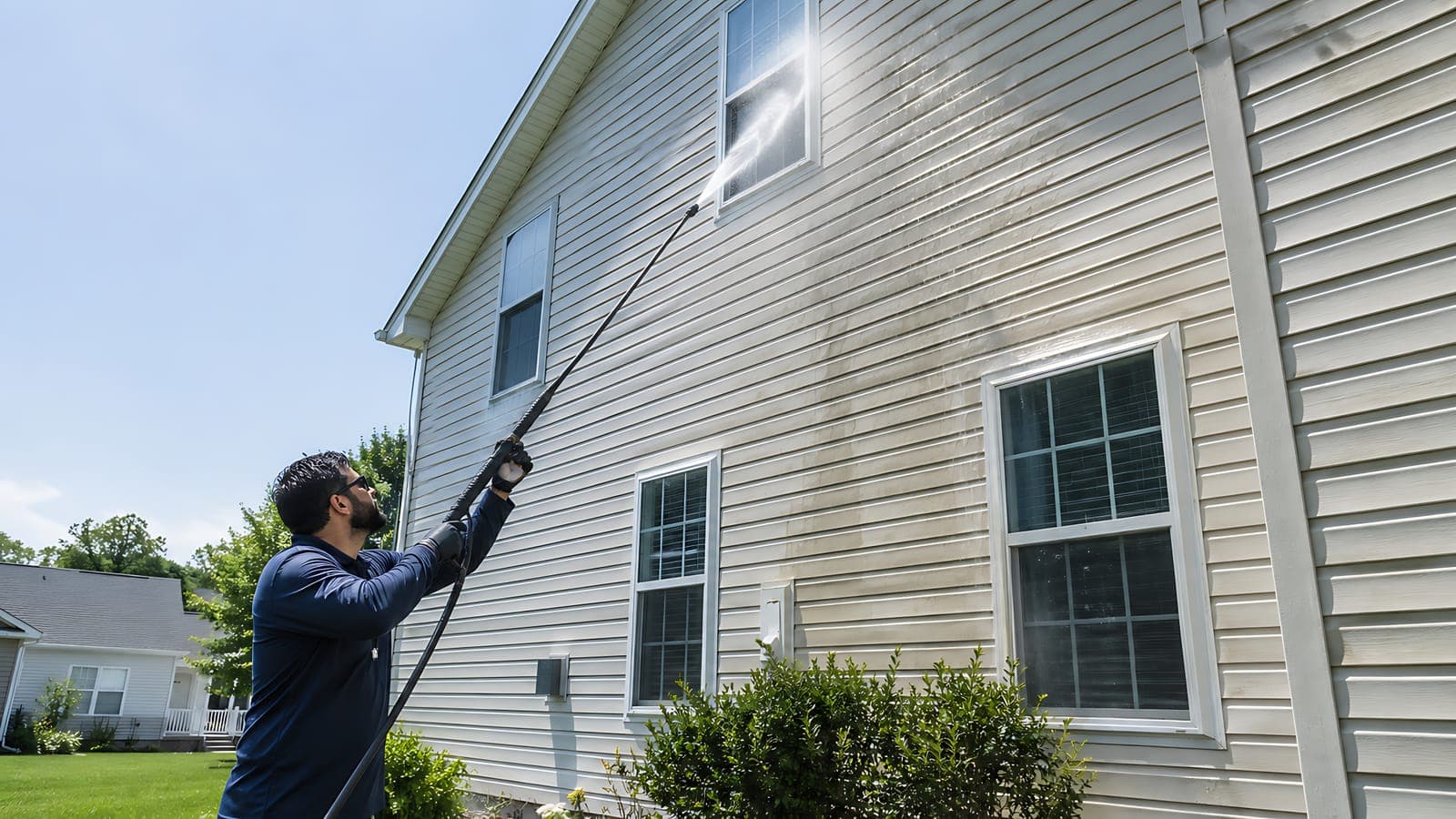
The dark streaking on the north side of your house is not dirt. It is a living mildew and algae colony feeding on the film that collects on any exterior surface, and it thrives on the side of the house that stays damp longest. In our climate that means the north and east elevations, plus anywhere a live oak or a wide eave keeps a wall from drying out.
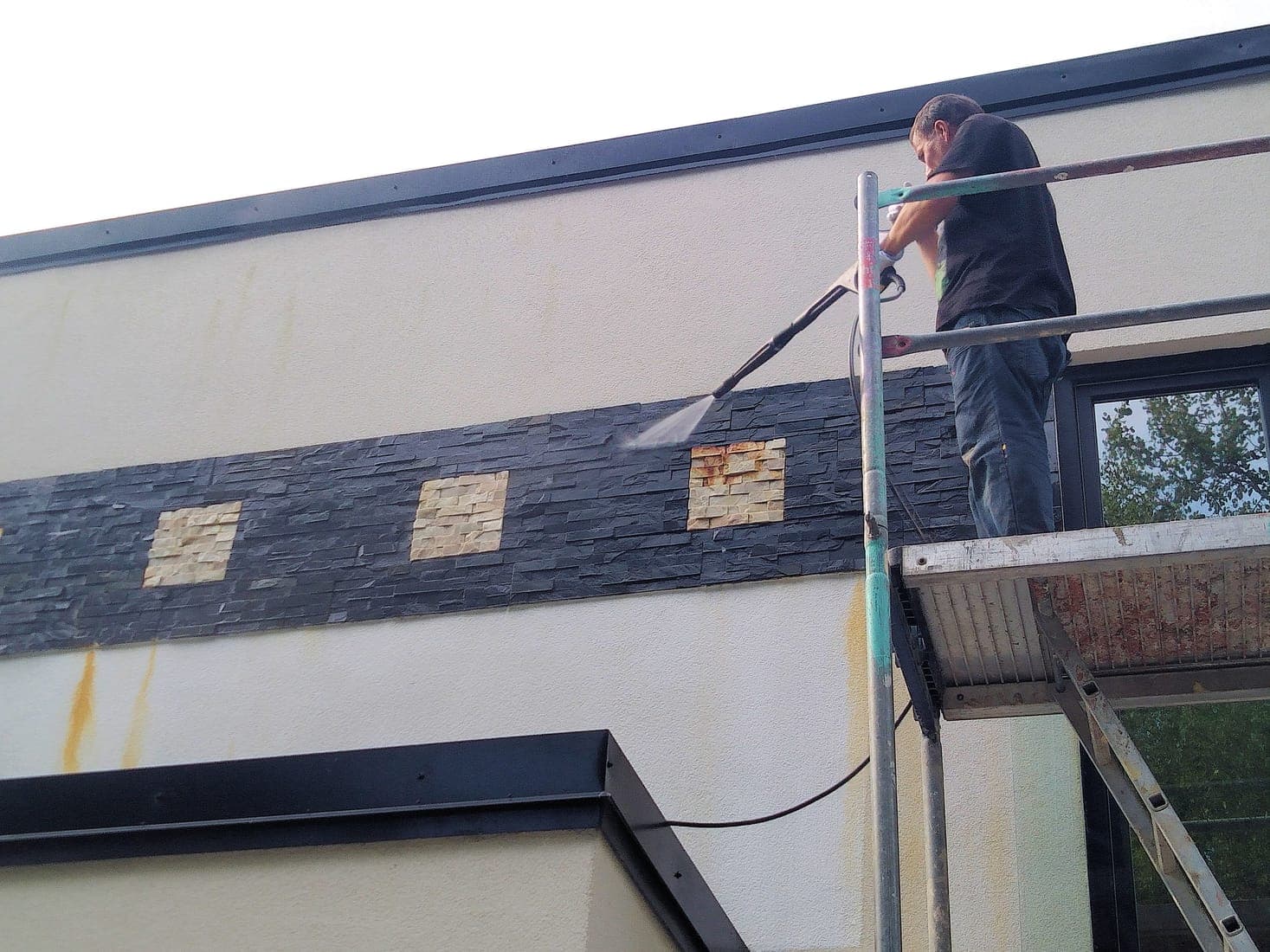
You cannot pressure wash that off a house safely. High-pressure water aimed at siding drives moisture behind laps and into weep holes, where it has no path out. Six months later you have mildew inside the wall cavity instead of outside it, and possibly a rot problem in the sheathing. On stucco it opens hairline cracks. On painted wood it lifts paint. On old mortar it erodes joints.
What soft washing actually is
Soft washing applies a dilute cleaning solution at garden-hose pressure — under 500 PSI, often much less — lets it dwell long enough to kill the organism, then rinses it away. The chemistry does the work. Water only carries it and takes it away.
Because it kills the colony at the root rather than removing the visible top layer, a soft wash lasts substantially longer than a pressure rinse of the same wall. Blasting removes what you can see and leaves the spores; soft washing removes the organism. That is the whole difference, and it is why the streaks come back in four months one way and two to three years the other.
Every material has a limit
Vinyl siding is forgiving to chemistry and unforgiving to pressure — it flexes, and water pushed behind a lap has nowhere to drain. Stucco and EIFS are porous and will hold solution, so they need lighter mixes and much more rinse. Brick is durable but its mortar joints are not, and old lime mortar erodes easily. Hardie and fiber cement handle both reasonably well but the paint layer sets the limit. Painted wood is the touchiest surface on most houses: chalking paint will lift, and a marginal paint job will fail in patches.
We identify what your walls are made of, mix for the most sensitive material on the elevation, and adjust as the surface responds.
The parts most crews skip
The value in a house wash is in the details nobody photographs. Soffits and fascia, which hold the heaviest growth because they never see direct sun. Gutter faces, where the vertical tiger-striping from years of runoff needs a separate dedicated treatment that a house mix will not touch. Window frames and sills. Downspouts. Porch ceilings. The dryer vent hood. Light fixtures and the wall behind them. Door surrounds.
We also protect what should not get wet: outlets and exterior electrical get covered, AC condensers get shielded, and every plant along the foundation gets soaked before and rinsed after.
Before and after
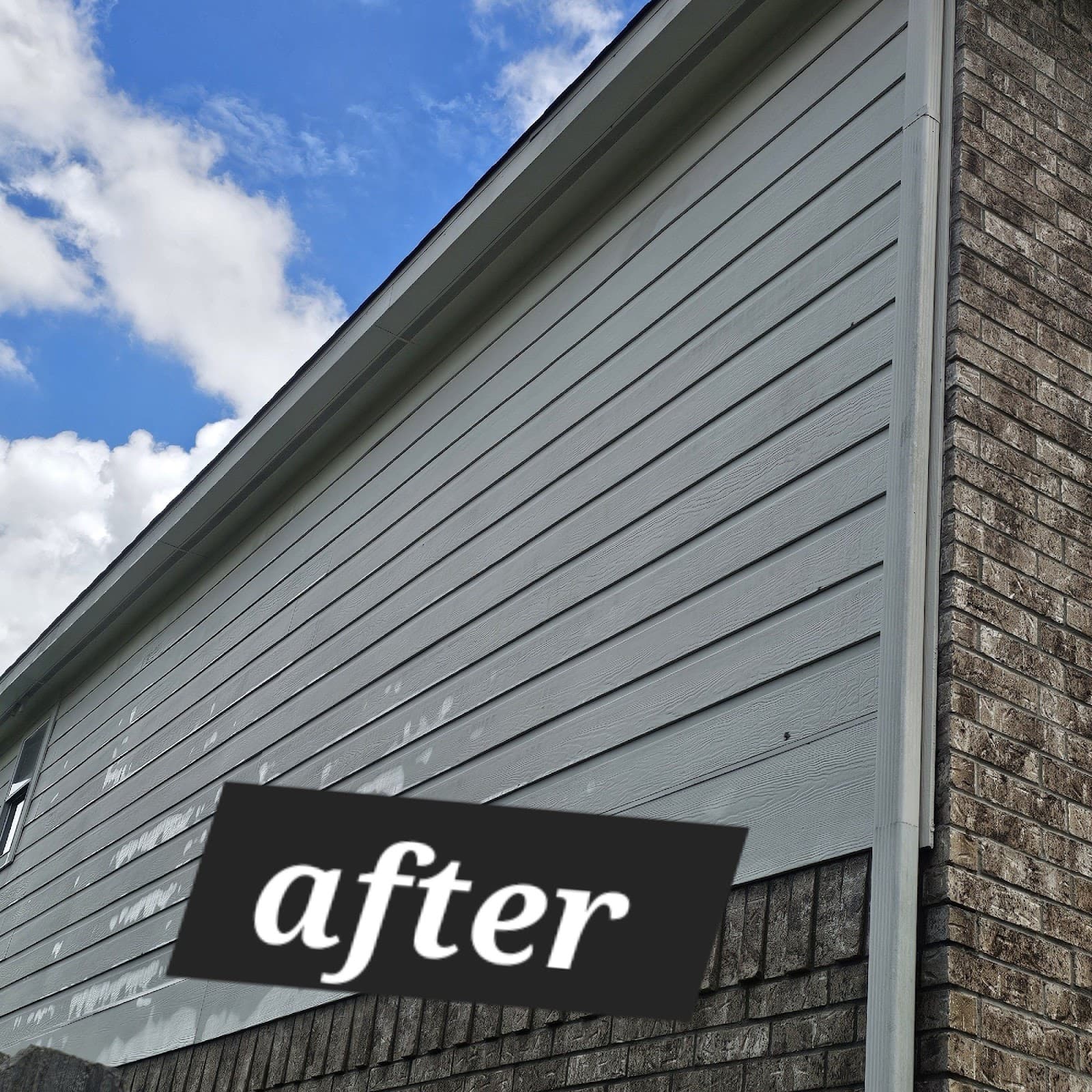
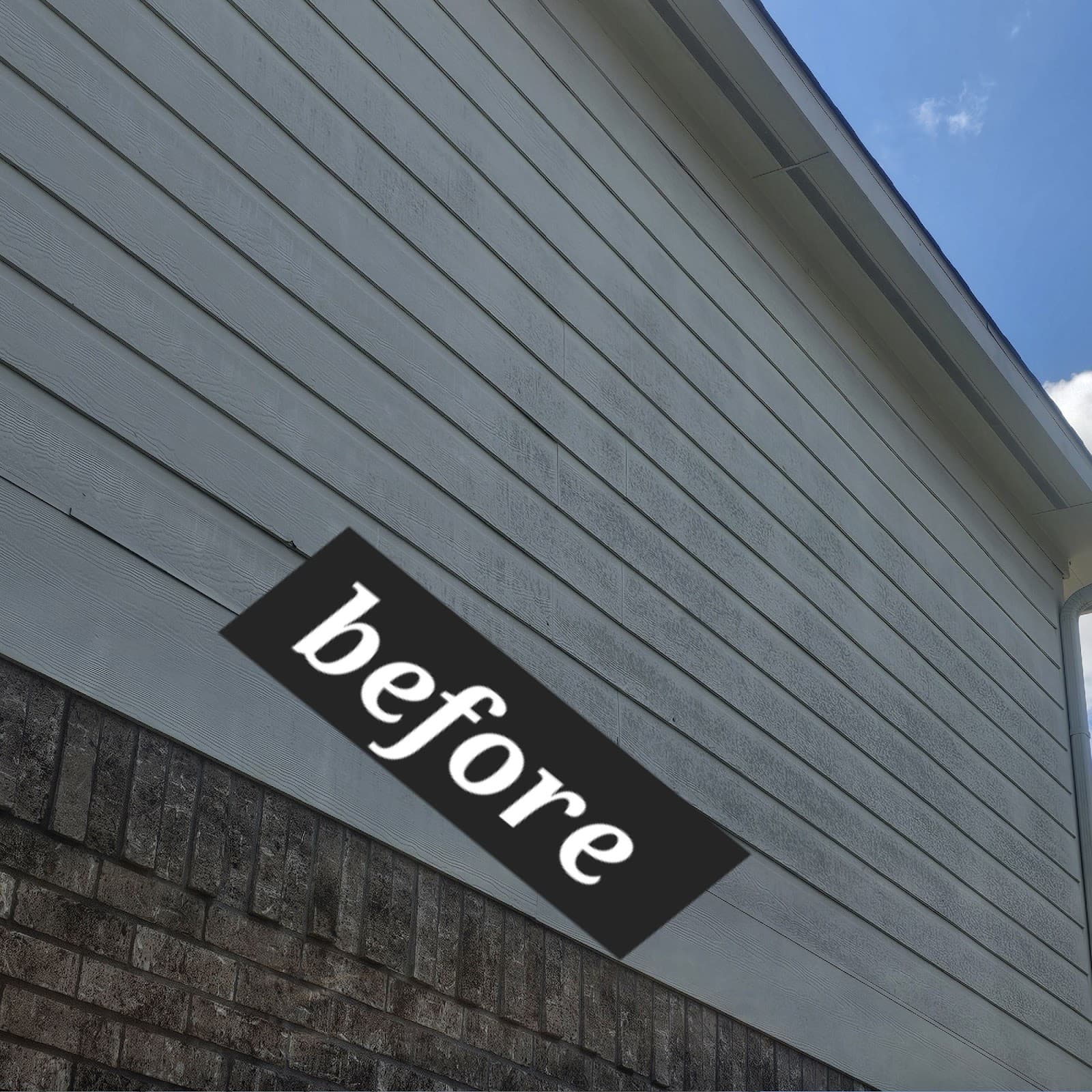
Low-angle listing pair of the same corner: before shows dark mildew on lap siding; after is the cleaned face with brick and downspout intact.
Why this matters here
North and east elevations across the Coastal Bend carry the heaviest mildew because our humidity keeps them from ever fully drying, and that is amplified anywhere a live oak shades a wall — common throughout older Corpus Christi neighborhoods. Homes within a mile of the bay accumulate a salt film that holds atmospheric moisture against the siding and speeds growth measurably. A great deal of the local housing stock is stucco or Hardie, both of which have hard limits on pressure, and the 1960s-1980s brick homes in Calallen and Robstown often have soft lime mortar joints that a pressure wand will erode in a single pass.
How a visit runs
- 01
Identify materials and elevations
We note every surface on the house and which elevation each is on. The north side has different growth and needs a different dwell than the sun-baked south side.
- 02
Protect and pre-wet
Foundation plantings soaked, exterior electrical covered, AC unit shielded, light fixtures protected. Pre-wetting is what keeps solution from concentrating on dry foliage.
- 03
Apply at low pressure
Dilute sodium hypochlorite with a surfactant, applied bottom-up so streaking cannot run over dry wall, at garden-hose pressure.
Under 500 PSI · mix by material - 04
Dwell, then agitate where needed
The solution needs time on the wall to kill the organism. Heavy growth on soffits and gutter faces gets soft-brush agitation, never pressure.
Dwell 8–12 min, re-wetted as needed - 05
Detail the overlooked surfaces
Soffits, fascia, gutter exteriors, window frames and sills, downspouts, porch ceilings, vents, and fixtures — each treated deliberately rather than caught in passing.
- 06
Top-down rinse
Full rinse from the roofline down so nothing dries with solution on it, followed by a second rinse of every plant, walk, and window below the work.
Scope
Included
- Full exterior wash of all reachable siding elevations
- Soffits, fascia, and gutter exteriors
- Window frames, sills, and exterior door surrounds
- Porch and patio ceilings
- Plant pre-wet and post-rinse
- Electrical and AC protection
- Mix adjusted for the most sensitive material on the house
Not included
- Gutter interior cleaning (see Gutter Cleaning)
- Roof cleaning (see Roof Soft Washing)
- Interior or exterior window glass polishing
- Anything above safe ladder reach without discussing access first
- Paint repair where existing paint was already failing
Questions about house washing
Pressure washing removes what you can see with force. Soft washing kills the organism with chemistry at garden-hose pressure and rinses it away. On siding, roofs, and painted surfaces, soft washing is both safer and longer-lasting — a soft wash typically holds two to three years where a pressure rinse of the same wall streaks again within months.