Lawn service
Yard Cleanup & Hauling
One-time resets for overgrown or storm-damaged properties. We cut it back, clear it out, and haul it away, then hand you a lawn that a normal maintenance schedule can keep.
From $195 · Cleanups are priced by crew hours plus haul-off volume, because no two overgrown properties are alike. We give you an estimated range and a not-to-exceed figure after walking it, so the number cannot run away from you mid-job. Debris volume is often the larger half of the cost.

Some yards are past the point where a mow helps. A rental between tenants. A property after a tropical system. An estate nobody has touched in a season. A yard that got away from a homeowner during an illness. In every case the job is not maintenance — it is a reset, and it takes different equipment, more labor, and a trailer.
This is often the most immediately satisfying work we do, because the change is total and it happens in a single day. It is also the work where an honest scope matters most, since what looks like one afternoon from the street is sometimes two days and four trailer loads.
The overgrowth reset
Grass over about eight inches cannot be taken to normal height in one pass. Cutting it that far down at once shocks the plant severely and, on St. Augustine, can kill patches outright by exposing runners that have been shaded for months. So a genuine reset is staged: knock it down to an intermediate height, clear the clippings so they do not mat and smother what is underneath, then cut to target on a follow-up visit several days later.
We say this out loud because customers expect one visit and a finished lawn. Staging is the difference between a yard that looks rough for a week and then thrives, and a yard that looks great for three days and then goes brown in patches.
Storm debris
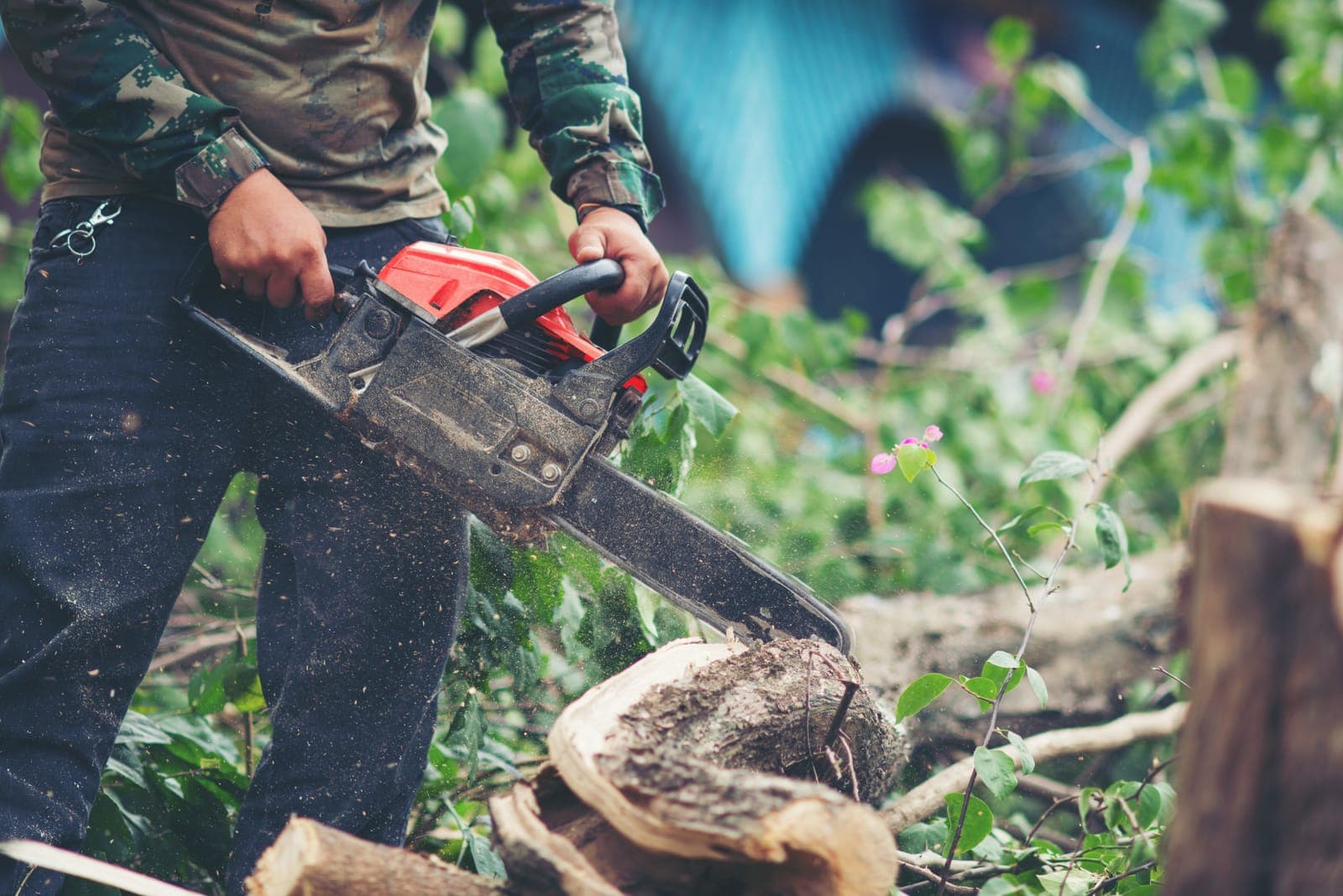
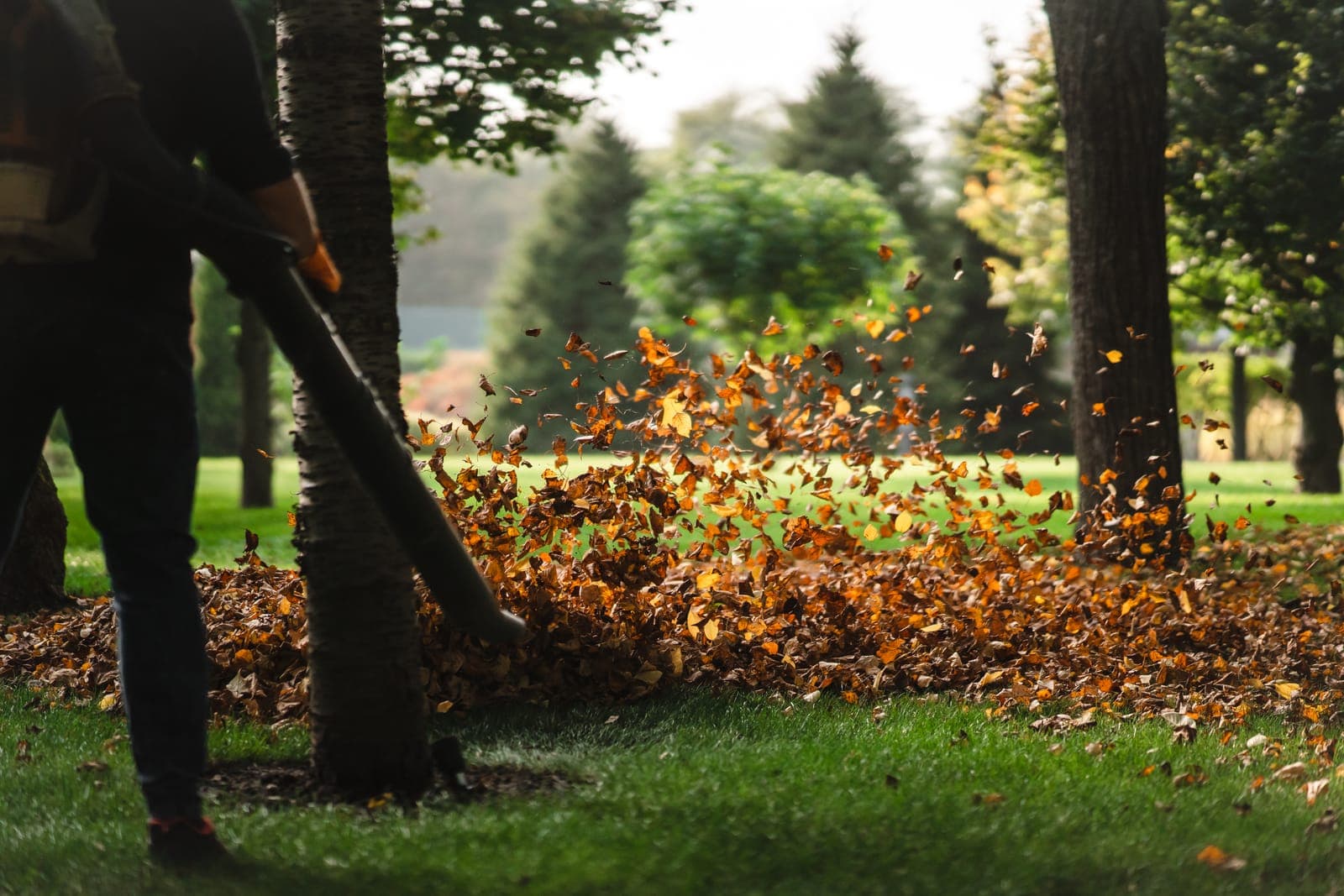
After a tropical system, the work is limbs, fronds, fence sections, blown-in debris, and the leaf mat that ends up plastered across every hard surface. We clear it, cut what needs cutting to ladder height, rake out beds, blow down and wash off hard surfaces, and haul everything away.
What we will not do is anything requiring a chainsaw above ladder height or near a power line. That is a certified arborist's job and pretending otherwise is how people get hurt. We will tell you plainly which parts of your storm cleanup we should handle and which parts need someone else, and we would rather do the ninety percent well than take on the ten percent we should not touch.
Bed and edge recovery
Beds are usually the part of an overgrown property that has deteriorated worst, because they lose their definition entirely. St. Augustine will run six feet into a neglected bed, weeds establish deep roots, and the original bed line disappears. We pull the invasion, re-cut a defined edge, and mulch, which restores the structure the yard was designed around. Hard edging along driveways and walks where grass has grown over the slab does the same for the hardscape.
Before and after
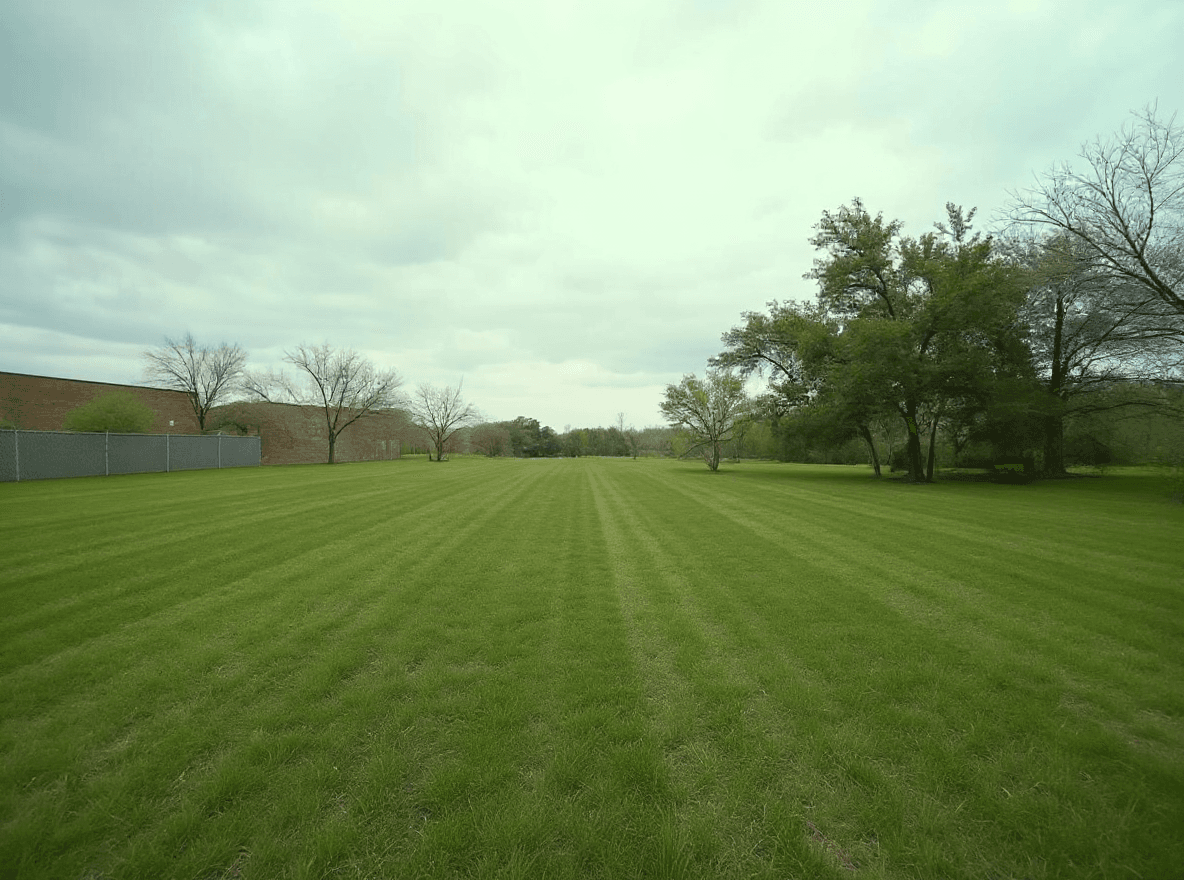
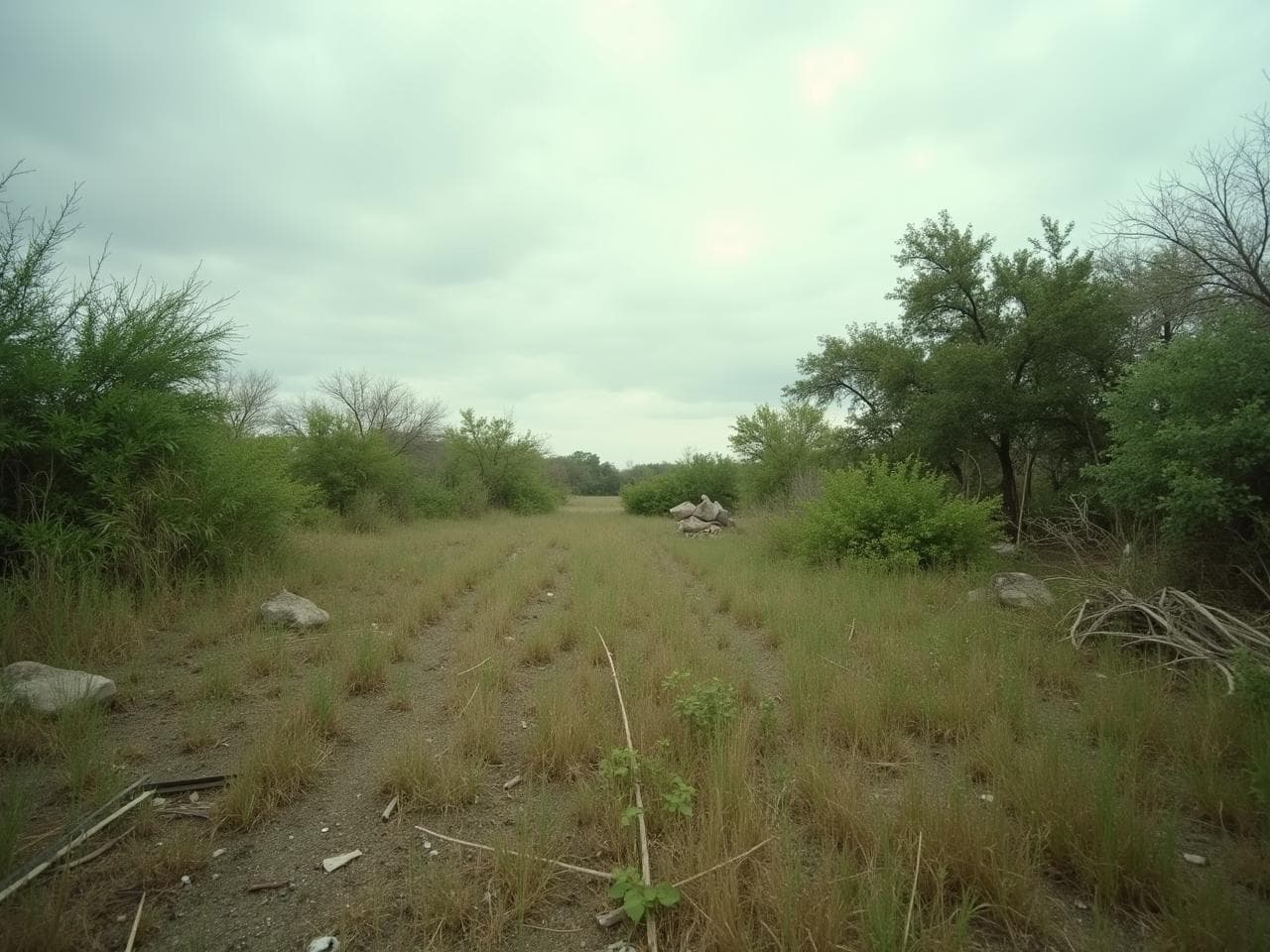
Knocked down to an intermediate height first, then cut to target several days later so the St. Augustine underneath was never scalped.
Why this matters here
Growth rates through a Coastal Bend summer mean a property can go from tidy to genuinely overgrown in six to eight weeks — far faster than most of the country, which is why so many of these calls come from people who were only away for a month. Tropical systems create the other half of this work: fronds, limbs, and a plastered leaf mat that stains concrete darker the longer it sits, so clearing early saves a pressure washing bill later. St. Augustine's runner habit also means a neglected bed does not just fill with weeds, it gets colonized several feet in by the lawn itself, and that has to be pulled rather than trimmed.
How a visit runs
- 01
Walk it and scope honestly
We tell you how many visits and how many loads it will really take, and what needs someone other than us. A cleanup quoted from a photo is a cleanup that gets renegotiated on the day.
- 02
Knock down the overgrowth
Heavy grass and weeds cut to an intermediate height rather than straight to target, so the turf underneath is not shocked or scalped.
Staged cut — never more than a third at once - 03
Clear beds and edges
Grass invasion pulled out of beds, weeds removed at the root where possible, bed lines re-cut, and concrete hard-edged back to a clean line.
- 04
Cut back and clear debris
Overgrown shrubs cut back to a recoverable shape, limbs to safe ladder height, storm debris and blown-in material collected.
- 05
Blow down and haul off
Every hard surface blown clean, all material loaded and hauled away. Nothing gets left in a pile at the curb unless you ask us to leave it.
- 06
Follow-up cut to target
Several days later we return to bring the turf to its correct height now that it can take it. This is included in a staged reset, not an upsell.
Scope
Included
- Staged cutting of heavy overgrowth to protect the turf
- Bed clearing and bed line re-cutting
- Hard edging along all concrete
- Shrub cutback to recoverable shape
- Storm debris collection to safe ladder height
- Full haul-off of all material
- Follow-up cut to target height on staged resets
Not included
- Tree work above ladder height or near power lines
- Stump grinding or removal
- Fence or structure demolition and repair
- Household or construction debris, hazardous material, tires, or appliances
- Grading, soil work, or resodding (quoted separately)
Questions about cleanup & hauling
Almost certainly not. Overgrowth resets are routine work and the single-day transformation is the most satisfying thing we do. What matters is staging the cut so we do not kill the turf underneath by scalping it in one pass.