Wash service
Pressure Washing
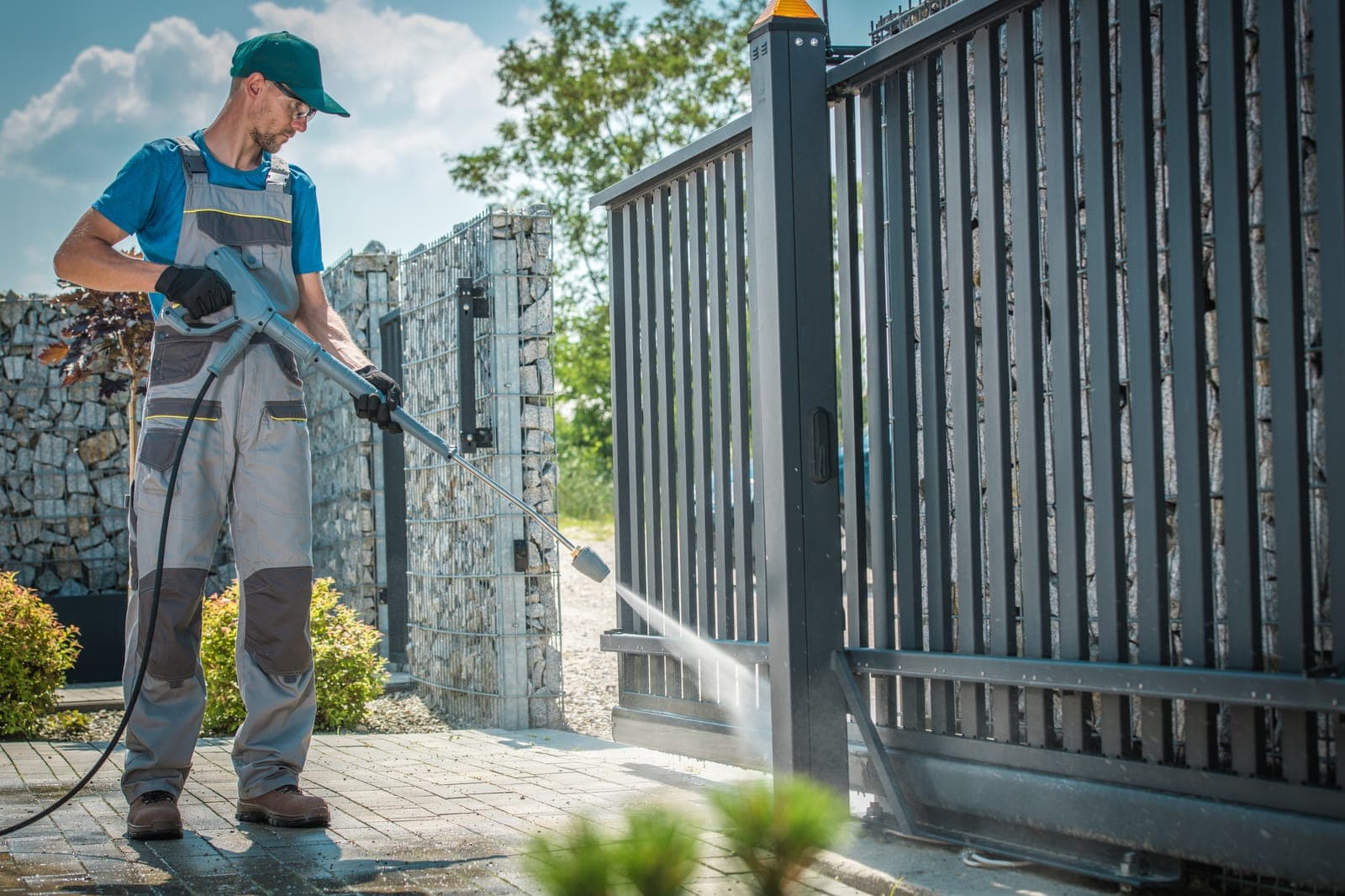
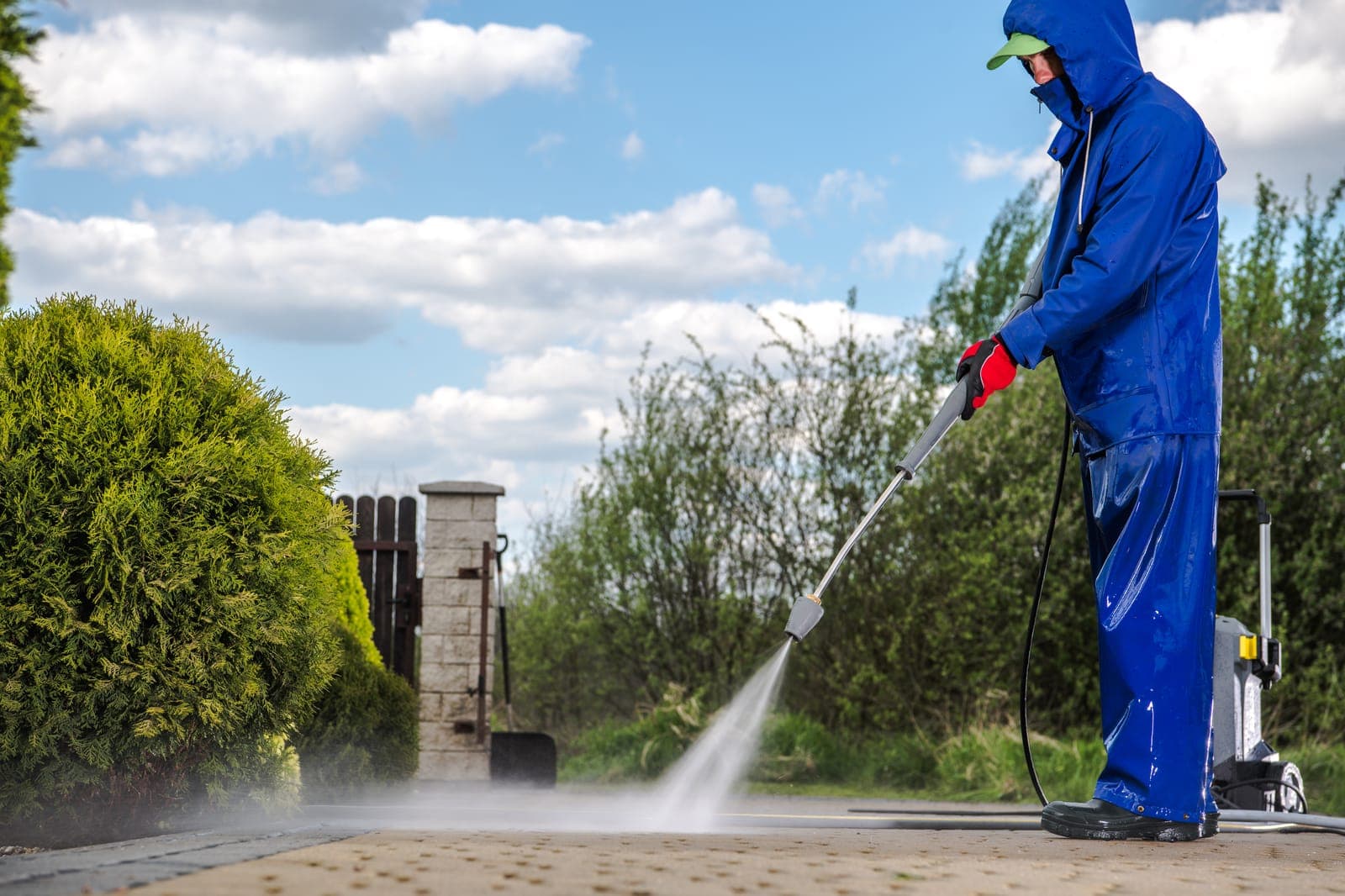
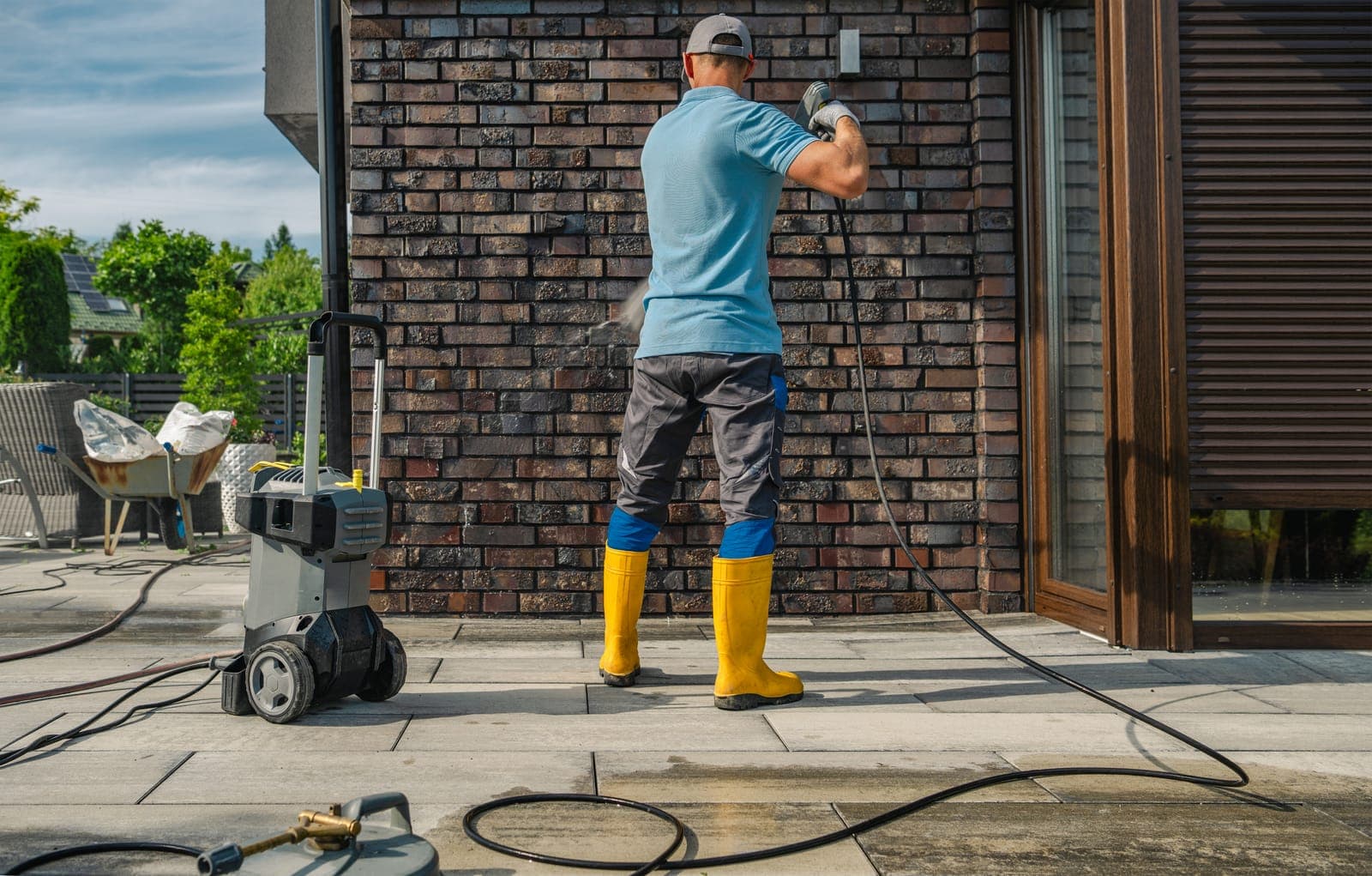
Surface-cleaner pressure washing for concrete and hard surfaces, with the PSI matched to the material so nothing gets etched or striped. Driveways, sidewalks, patios, pool decks, curbs, and dumpster pads.
From $149 · Straightforward driveways and sidewalks sit at the low end of the range. Heavy algae, deep-set stains, pavers needing joint care, decorative concrete requiring low pressure, and anything with difficult access or no water spigot nearby move it up. A typical two-car driveway with a walkway lands in the $180–$320 window.
Concrete in the Coastal Bend does not get dirty so much as it gets colonized. Between our humidity, the shade from a live oak, and eight months of warm nights, a driveway grows a biological film — algae, mildew, and lichen — that darkens the slab so gradually that most people forget what color it started as. They think the concrete has aged. It has not. It is covered.
Which is why the right approach is chemistry plus water, not brute pressure. Pressure alone can remove that film, but at the PSI required it also removes the top layer of cement paste, leaving a slab that is visibly cleaner and permanently rougher — and a rough slab holds dirt and regrows algae faster than a smooth one. So the second cleaning comes sooner, and looks worse.
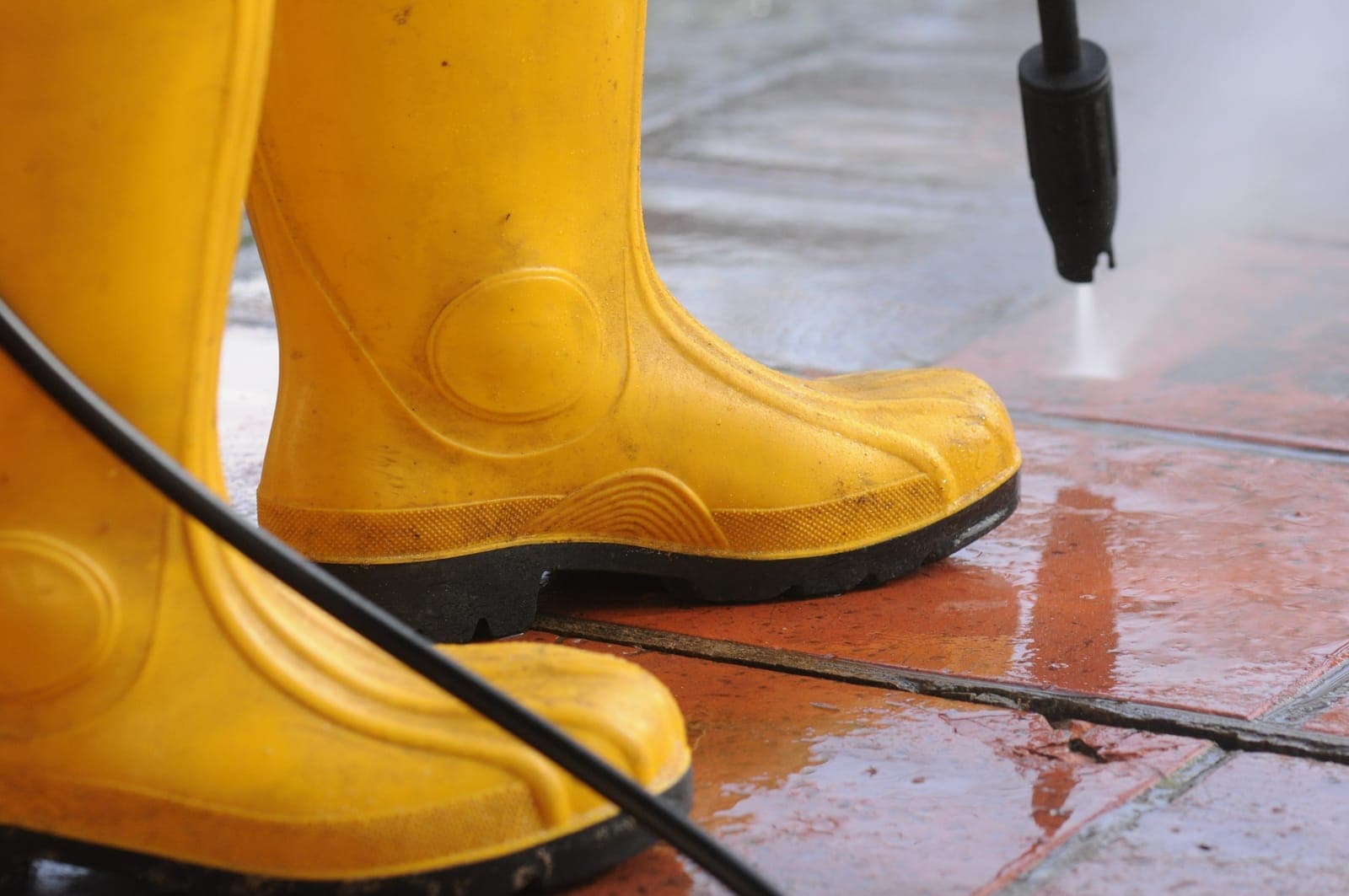
Why we use a surface cleaner, not a wand
A wand cleans in a stripe. Overlap it slightly wrong across a forty-foot driveway and you get zebra striping that is visible from the street for years, because the stripes are actually differences in surface texture. It is the single most common mark of an amateur pressure washing job, and it is not fixable without resurfacing.
We clean flat concrete with a rotary surface cleaner — an enclosed head with rotating jets riding on the slab at a fixed height. It delivers even coverage at consistent standoff distance, so the whole surface gets identical treatment. Wands come out only for edges, corners, and vertical work where a surface cleaner physically cannot reach.
Pressure matched to the material
Different surfaces have different limits, and exceeding them is permanent. Broom-finished concrete tolerates a lot. Older concrete with exposed aggregate does not. Pavers lose their joint sand and start to shift. Stamped and stained concrete has a sealer and a color layer that can be blown straight off. Soft brick and mortar joints erode. Wood is a different job entirely.
We test an inconspicuous area first, set pressure and nozzle to the material, and adjust if the surface tells us to. That test patch also shows you exactly how much lift to expect before we commit to the whole area — useful, because a slab with deep-set rust or a two-year oil stain will not come back to new and we would rather you know that in the first ten minutes than at the end.
Stains, honestly
Some things come out completely: algae, mildew, general grime, mud, pollen film, leaf tannin, most tire marks, and the dark line where a mower has been parked. Some things improve substantially but do not vanish: old oil that has soaked into the pore structure, rust from a fertilizer spill or a metal chair leg, red clay staining, and paint overspray. Some things are in the concrete rather than on it, and no amount of pressure will move them.
We tell you which category yours is before we start. Anyone who promises that every stain will disappear either has not looked at your driveway or is not telling you the truth.
Where the water goes
We control runoff. Cleaning solution and lifted organic material get directed onto turf and landscape where it dilutes and breaks down, not straight down a storm drain to the bay. On commercial pads with a drain in the middle of the work area, we take additional containment steps. We also protect nearby plantings by pre-wetting them and rinsing them afterwards — sodium hypochlorite is hard on foliage at strength and harmless once diluted.
Before and after
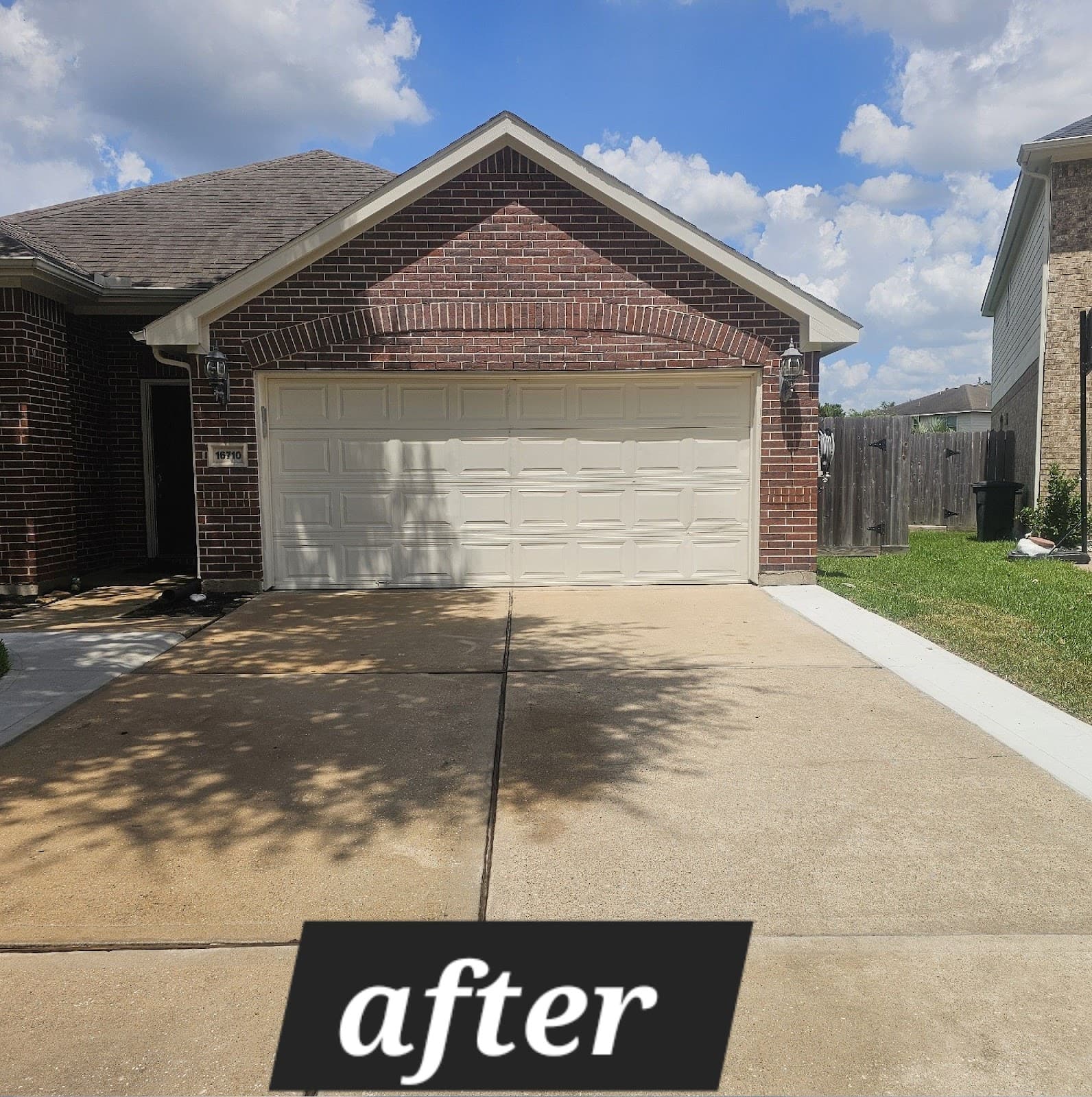
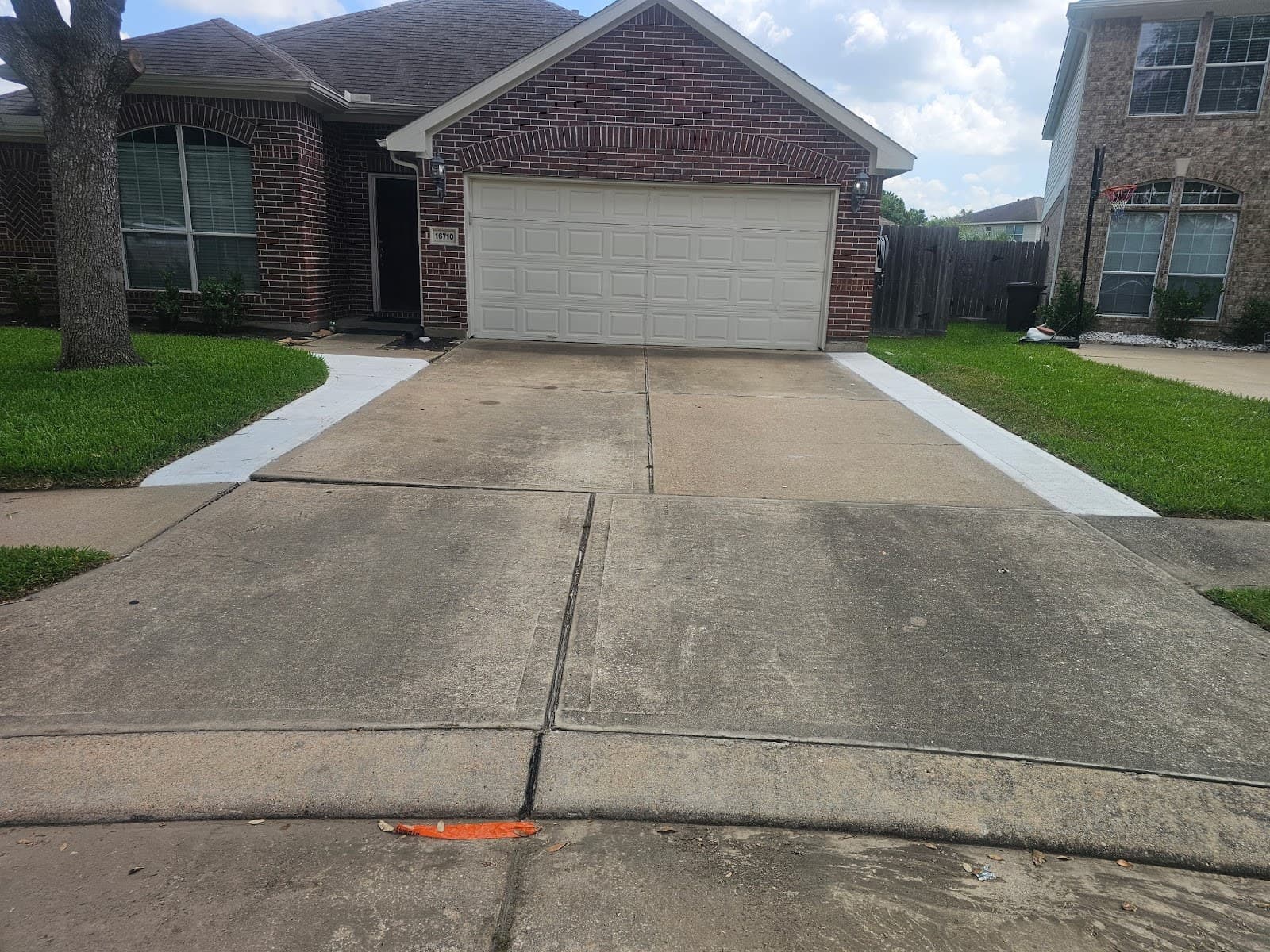
Same slab, same camera line: the dark center is the before condition; the bright face is after a surface-cleaner pass with edges detailed by hand.
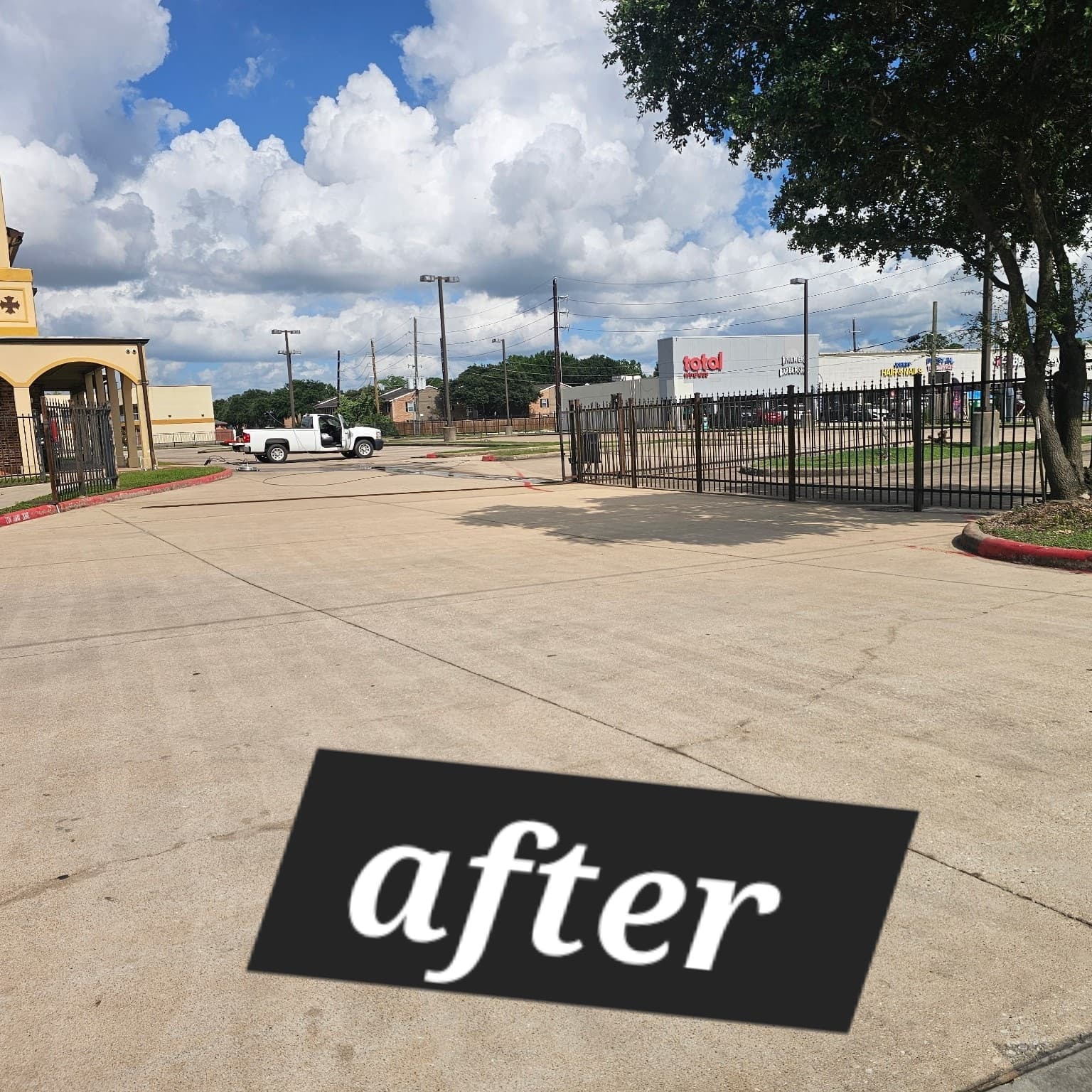
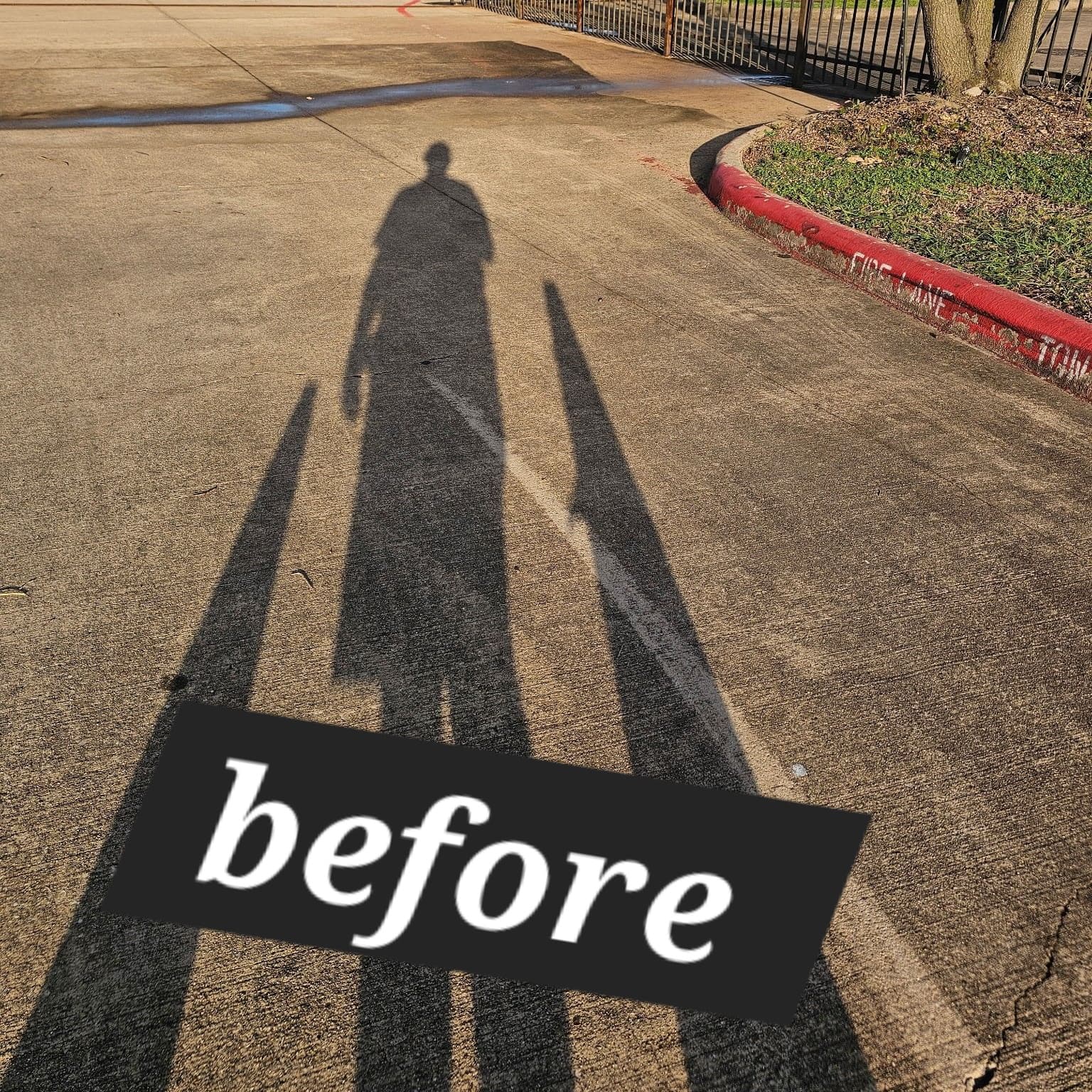
Same red fire-lane curb and iron fence line: before is the dark, soiled field; after is the bright concrete after a surface-cleaner pass.
Why this matters here
Coastal Bend humidity combined with warm nights for most of the year means biological growth on concrete is continuous rather than seasonal, and slabs under live oaks in older Corpus Christi neighborhoods regrow fastest. Hard water here also leaves mineral spotting on any surface that gets sprinkler overspray, which reads as dirt and needs an acid-based treatment rather than a stronger nozzle. Properties near the bay pick up salt film on concrete and it holds moisture, accelerating growth further. And after any tropical system, driveways collect a tannin layer from leaf and debris pile-up that sets darker the longer it sits.
How a visit runs
- 01
Walk and identify
We look at what is actually on the surface — biological growth, oil, rust, tannin, overspray — and tell you what will fully clear and what will only improve. Expectations get set before equipment comes off the truck.
- 02
Protect and pre-wet
Nearby plants get soaked before any chemistry goes down so nothing concentrated reaches dry foliage. Fixtures, outlets, and anything that should not get hit are covered.
- 03
Apply and dwell
A sodium hypochlorite solution mixed for the surface, applied at low pressure and given time to work. The dwell is what does the cleaning. Rushing it means compensating with pressure, which is how slabs get damaged.
Dwell 5–10 min, kept wet - 04
Surface clean at matched pressure
Rotary surface cleaner across all flat concrete for even coverage and no striping. Pressure set from the test patch and adjusted by material.
Concrete 2,500–3,500 PSI · Pavers 1,500–2,200 · Sealed/stamped 1,200–1,800 - 05
Detail the edges
Wand work along borders, expansion joints, corners, steps, and against the house — everywhere the surface cleaner cannot physically reach. This is what keeps a clean slab from having a dirty frame.
- 06
Rinse everything down
Full rinse of the cleaned area plus every plant, wall, and window that got overspray. Runoff directed to landscape, not the storm drain.
Scope
Included
- Test patch and honest expectation setting before we start
- Plant protection: pre-wet and post-rinse
- Surface-cleaner treatment of all flat concrete — no wand striping
- Detail wand work on edges, joints, corners, and steps
- Pressure matched to your specific surface
- Runoff directed away from storm drains
- Full rinse of adjacent surfaces and landscape
Not included
- Sealing after cleaning (available as an add-on, needs a dry window)
- Concrete repair, crack filling, or resurfacing
- Guaranteed removal of set-in oil, rust, or paint
- Roof cleaning — that is soft washing and a different service
- Interior water extraction
Questions about pressure washing
Not the way we do it. Damage happens when someone uses too much pressure to compensate for not letting chemistry work — that strips the top layer of cement paste and leaves the slab rougher than it started, which makes it regrow algae faster. We use a surface cleaner at matched pressure with a proper dwell time, and we test an inconspicuous area first.